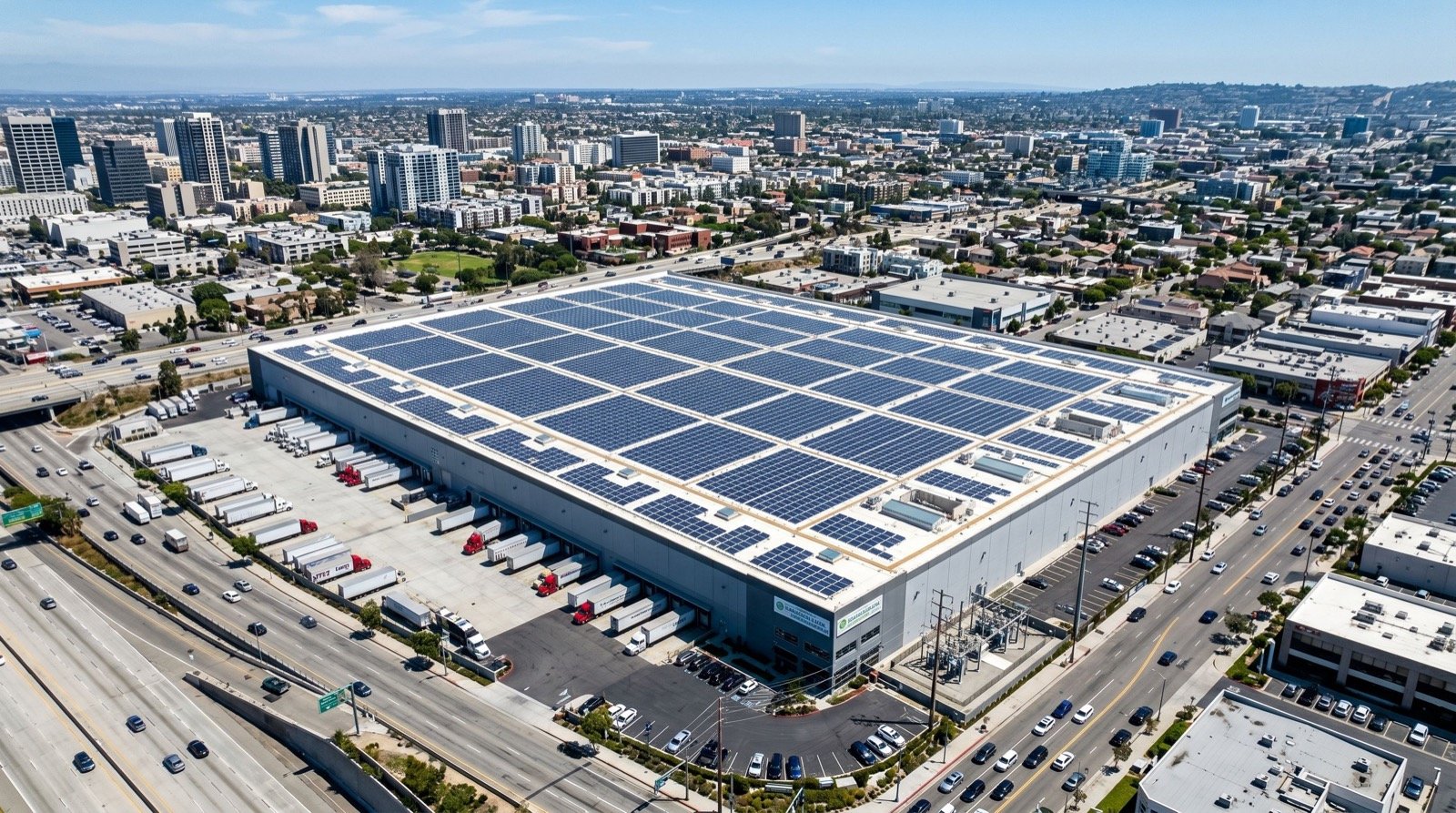

Solar Panel Payback Period in Pakistan: How to Calculate Your Real ROI in 2026
Every homeowner asks the same question before going solar: how long until this pays for itself? The honest answer depends on your city, your consumption, and the system you choose — but with electricity tariffs still climbing in 2026, the solar panel payback period in Pakistan has actually gotten shorter than it was just a few years ago. This guide walks through exactly how to calculate your own ROI, with real numbers.
The Simple Payback Formula
At its core, the payback period calculation is straightforward:
Payback Period = Total System Cost ÷ Annual Electricity Savings
The complexity comes from estimating that second number accurately, since it depends on your sun exposure, panel efficiency, system size, and how electricity tariffs move over the coming years.
Step 1: Know Your Current Electricity Spending
Pull your last 12 months of bills and calculate your average monthly cost. Seasonal variation matters — a household that spends PKR 10,000 in winter and PKR 40,000 in summer has a very different profile than one with flat year-round usage, and this affects how large a system makes financial sense.
Step 2: Estimate Your System’s Annual Output
A 5kW system in most of Pakistan generates roughly 7,500-8,500 units (kWh) per year, assuming good sun exposure and minimal shading. Southern and high-altitude regions tend to sit at the higher end of that range due to stronger, more consistent solar irradiance.
Step 3: Factor In Your City’s Specific Conditions
Solar output isn’t identical everywhere, and neither is installer pricing. Homeowners researching solar panels in Multan benefit from one of the country’s highest average annual sunshine counts, which can shave months off a typical payback calculation compared to cloudier regions.
Meanwhile, buyers comparing a solar company in Sialkot should factor in the city’s mix of residential and light-industrial power use, since workshops running machinery during peak sun hours often see faster payback than purely residential homes, simply because they consume more of the solar output directly rather than exporting it.
Real-World Payback Example
| Scenario | System Size | System Cost (PKR) | Annual Savings (PKR) | Payback Period |
|---|---|---|---|---|
| Small household | 3kW | 800,000 | 180,000 | ~4.4 years |
| Mid-size household | 5kW | 1,250,000 | 330,000 | ~3.8 years |
| Workshop/commercial | 10kW | 2,300,000 | 700,000 | ~3.3 years |
These figures are illustrative averages for 2026 and will shift based on your exact tariff slab, installer pricing, and sun hours. Still, the pattern holds: larger systems used closer to full capacity during the day tend to pay back faster per rupee invested.
What Happens After Payback?
Once the system pays for itself, every unit of electricity it produces afterward is essentially free, aside from minor maintenance costs. With most quality panels carrying 25-year performance warranties, a system that pays back in 4 years delivers roughly 21 years of near-free electricity after that point.
Does Battery Storage Change the Payback Math?
Yes, and not always in the direction people expect. Adding batteries increases upfront cost by 40-60%, which lengthens the pure financial payback period. However, batteries also eliminate generator fuel costs and productivity losses during load-shedding — savings that don’t show up in the basic formula but matter enormously for households and businesses that currently rely on backup power daily.
Common Factors That Shorten or Lengthen Payback
- Shortens it: Higher current electricity bills, strong year-round sun exposure, no major roof shading, daytime-heavy power usage.
- Lengthens it: Oversized systems relative to actual consumption, poor panel orientation, heavy battery investment, frequent dust buildup without regular cleaning.
Environmental Payback Matters Too
Beyond rupees, there’s a carbon payback worth mentioning. A typical 5kW residential system offsets several tons of CO2 emissions annually compared to grid electricity generated from Pakistan’s fuel mix, which still includes a meaningful share of fossil fuels. The International Energy Agency (IEA) has repeatedly highlighted South Asia’s rooftop solar growth as one of the most effective near-term tools for reducing residential carbon footprints, alongside the direct financial benefit to households.
How to Get an Accurate Payback Estimate for Your Home
- Request a free, written site survey rather than a phone-based estimate.
- Share at least 12 months of past electricity bills with your installer.
- Ask for the exact projected annual kWh output in writing, not just a vague percentage claim.
- Confirm whether the quote includes net metering registration costs.
- Compare at least two or three quotes before signing, the same way you would compare trusted professionals for any major home investment.
How Tariff Slabs Affect Your Calculation
Pakistan’s tiered electricity pricing means heavy users pay a much higher per-unit rate once they cross certain monthly consumption thresholds. This matters a great deal for payback math, because a household in a high slab saves more per unit offset than one already in a cheap, low-usage slab.
- Households above 700 units a month typically sit in the highest tariff slabs, making every solar-offset unit especially valuable.
- Lower-usage households still benefit, but the rupee-per-unit savings are smaller, which stretches the payback period slightly.
- Commercial and industrial tariffs differ again, often with time-of-use pricing that makes daytime solar production even more valuable.
Ask your installer to run the payback calculation against your actual slab, not a generic national average, since the difference between slabs can shift the result by a year or more.
Sample Worksheet You Can Use Yourself
You don’t need specialized software to get a rough payback estimate. Try this simple worksheet before your site survey, then compare it against the installer’s formal quote:
- Write down your average monthly bill over the last 12 months.
- Multiply by 12 to get your annual electricity spend.
- Ask for a quoted system cost sized to offset 80-90% of that spend (slightly undersizing avoids wasted export credit).
- Divide the system cost by your estimated annual savings (roughly 85-90% of your old annual spend).
- The result is your rough payback period in years — compare it against the table above to sanity-check the number.
This back-of-envelope method won’t be perfectly precise, but it gives you a baseline to challenge any installer quote that seems unrealistically optimistic or suspiciously slow to pay back.
Frequently Asked Questions
What is a good payback period for solar panels in Pakistan?
In 2026, a payback period of 3-5 years is considered strong for a residential solar system, while anything under 4 years is excellent given current tariff levels.
Does the payback period change if electricity prices keep rising?
Yes — rising grid tariffs shorten your effective payback period, since the electricity you’re no longer buying becomes more valuable each year compared to your fixed solar investment.
Is a smaller or larger solar system better for fast payback?
A system sized closely to your actual consumption, rather than deliberately oversized, generally achieves the fastest payback, since it maximizes the share of output you use directly rather than exporting at lower net metering credit rates.
Do inverters affect the payback calculation?
Yes. A higher-efficiency, well-matched inverter converts more of your panels’ DC output into usable AC power, directly improving your real-world annual savings and shortening payback.
Final Takeaway
Calculating your real solar payback period takes a bit more than a single online calculator — it requires honest numbers about your usage, your city’s sun profile, and your installer’s actual equipment quality. Do that homework properly in 2026, and most Pakistani households will find solar pays for itself well within 4-5 years, with two decades of near-free electricity to follow.
If you like comparing trusted professionals before committing to a major purchase, our guide to vetting trusted professionals in large property decisions follows the exact same due-diligence principles worth applying to your solar installer search.